
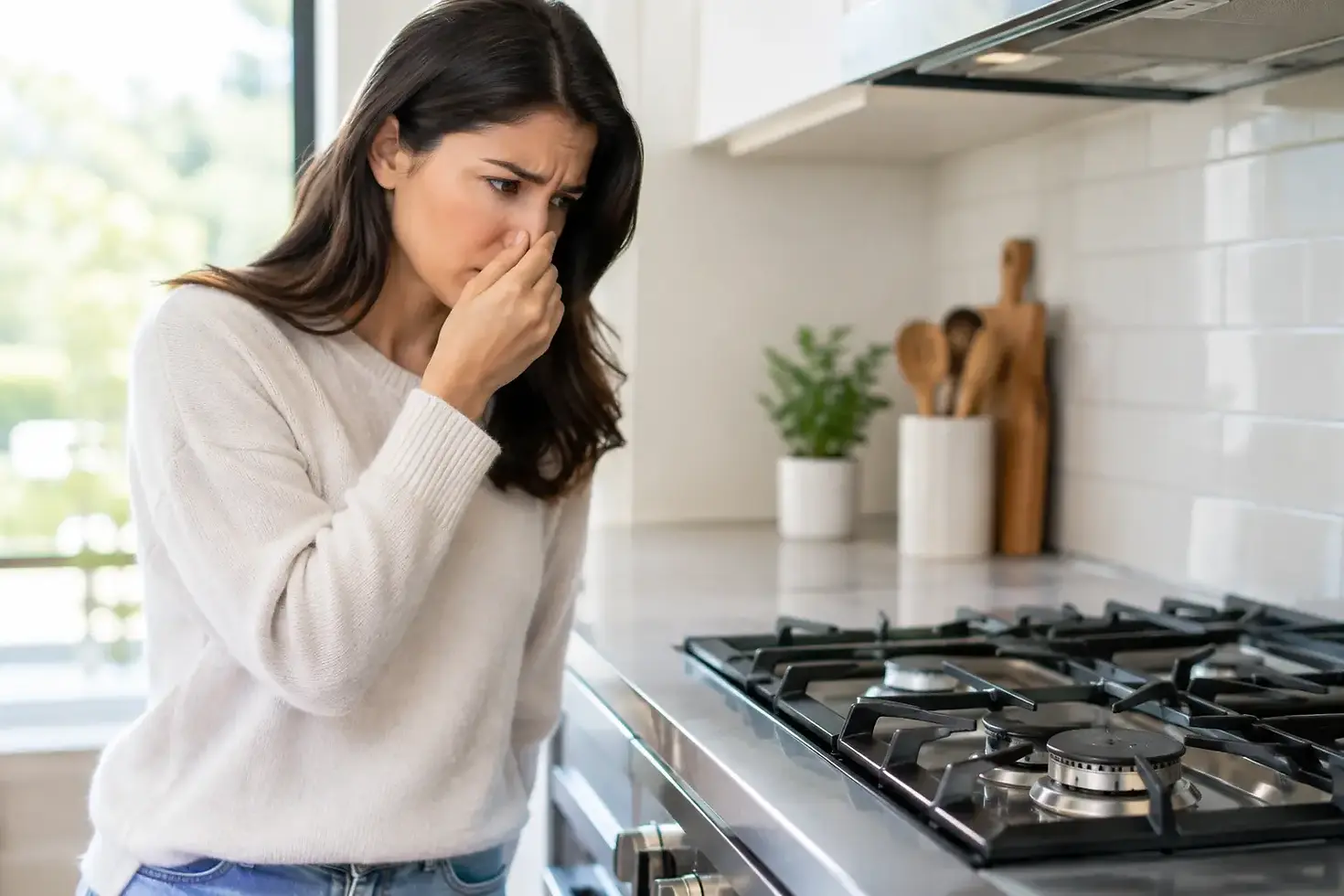
Gas Smells From Your Stove: What to Do First

A gas odor near the kitchen is not a problem to wait on. If gas smells are strong, persistent, or spreading through your home, treat the situation as a possible gas leak and get everyone outside immediately. A working stove should not leave your kitchen smelling like gas after it has been turned off.
Natural gas itself has no smell. Utility companies add a sulfur-like odorant so people can recognize a leak quickly. Some describe it as rotten eggs, sulfur, or a sharp chemical smell. Whatever you call it, the safe response is the same: do not try to locate the leak yourself or keep using the appliance to see whether the smell goes away.
What to do when you smell gas
If the odor is strong, leave the home right away. Take people and pets with you, and move a safe distance away from the building. Once you are outside, call 911 or your gas utility's emergency number. Follow their instructions before going back inside.
Do not turn lights, exhaust fans, appliances, or other electrical switches on or off. Do not light a match, use a lighter, smoke, or plug anything in. Even a small spark can ignite gas in an enclosed area. Avoid using your phone until you are outside, and do not start a car in an attached garage.
If you can leave without touching anything, do so. Do not try to shut off a gas valve unless emergency personnel or the utility company has instructed you to do it and you know exactly which valve to use. Your first job is getting people safely out, not diagnosing the appliance.
When gas smells may be coming from a stove or oven
A brief, faint gas odor can occur for a moment when a gas burner is being lit. The smell should stop as soon as the flame is established. If the burner does not ignite within a few seconds, turn the control knob off. Do not keep sending gas to an unlit burner.
A smell that continues after ignition, returns when all controls are off, or becomes stronger near the range is not normal. It may mean a burner is not lighting properly, a valve is not closing fully, an igniter is failing, or there is an issue with the appliance's gas connection. An oven can create similar concerns when its igniter is too weak to open the gas valve correctly or when a burner assembly is dirty or damaged.
You may notice a specific pattern: the burner clicks but will not light, the oven takes too long to heat, one knob feels loose, or the smell appears only after cooking. Those details can help a technician identify the problem, but they do not make it safe to continue using the appliance. Stop using the stove or oven until it has been checked.
A gas smell after cooking is not something to ignore
Sometimes a burner control is accidentally left slightly open after a meal. If you notice the odor immediately and can safely see that a knob is not in the off position, do not take chances in a room that already smells strongly of gas. Leave the home and call for emergency guidance from outside.
If emergency responders or the utility confirm there is no active supply-line leak, an appliance technician can inspect the range. The repair may be as straightforward as correcting a burner or ignition issue, but the source must be identified before the appliance goes back into service.
Gas odor versus normal cooking odors
Not every unpleasant kitchen smell is a gas leak. Food residue in the oven, grease on a burner, spilled liquid, and a new appliance heating for the first time can produce smoke or a sharp burnt smell. These odors are different from the sulfur-like smell added to natural gas.
Carbon monoxide is another concern with fuel-burning appliances, but it has no odor. That is why every home with gas appliances should have working carbon monoxide alarms, ideally near sleeping areas and as recommended by the alarm manufacturer. Headaches, dizziness, nausea, confusion, or unusual fatigue while using a gas appliance can be warning signs of carbon monoxide exposure. Get outside into fresh air and call 911 if anyone has symptoms.
A yellow or orange flame can also point to incomplete combustion, although flame color can be affected by humidity or dust. Gas burners normally produce mostly blue flames. If flames are consistently yellow, uneven, lifting away from the burner, or producing soot, stop using the appliance and arrange an inspection. The problem may involve blocked burner ports, air flow, or a component that needs professional repair.
Common reasons a gas range develops a problem
Gas appliances are designed with safety controls, but burners, igniters, valves, and connections wear over time. Grease buildup and food debris can block burner ports, leaving gas unable to ignite evenly. A failed spark igniter may click repeatedly without lighting the burner. On older ranges, a worn valve or damaged knob can prevent a burner from shutting off as it should.
Oven problems can be less obvious. If the oven smells like gas but does not heat correctly, the igniter may be weak or the burner may not be lighting as designed. Repeatedly cycling the oven or trying to relight it can allow unburned gas to build up. That is a situation for a qualified technician, not a do-it-yourself repair.
The location of the odor matters, too. Gas smells behind the appliance, near the flexible connector, or near the shutoff valve may involve the supply connection rather than the stove itself. The gas utility should address suspected gas-line leaks and determine when the area is safe. Once the supply is cleared, an appliance repair professional can handle a range or oven defect.
What not to do while waiting for help
Do not use a flame to test for a leak. Do not spray cleaners, pour water around connections, remove panels, or disconnect the range. While soap-solution testing is sometimes discussed for minor connection checks, it is not the right move when you smell gas inside your home. You need a professional assessment and, if necessary, an emergency response.
Do not assume opening a window makes it safe to stay indoors. Ventilation does not eliminate the risk of an active leak, and it can delay the call that protects your household. It is also not a good idea to sleep on the issue and check again in the morning. Gas odors require action when you notice them.
For renters, notify your landlord or property manager after contacting emergency services or the gas utility. A landlord needs to know about an unsafe appliance, but that call should never replace an emergency call when there is a strong gas odor or suspected leak.
When to call for stove and oven repair
After the home has been declared safe, schedule appliance repair if the smell appears to be connected to the range or oven. Call for service when a burner will not ignite, an igniter keeps clicking, flames are uneven, the oven heats slowly, a knob will not turn correctly, or a gas odor returns during normal use.
For homeowners, renters, and property managers in Jersey City, Hoboken, Newark, Elizabeth, Union City, and nearby North New Jersey communities, FixFast can diagnose gas stove and oven issues on-site and explain the repair before work begins. A technician can inspect the appliance components that affect ignition, burner performance, and safe operation, then complete the needed repair with a 90-day warranty on completed work.
Do not put up with a kitchen that makes you second-guess every meal. Once emergency officials have confirmed the area is safe, get the appliance inspected promptly so you can cook with confidence again.


Comments